Apple’s iPhone 17: Post-Launch Hype, “Liquid Glass” Illusions, or a Q4 Comeback Story?
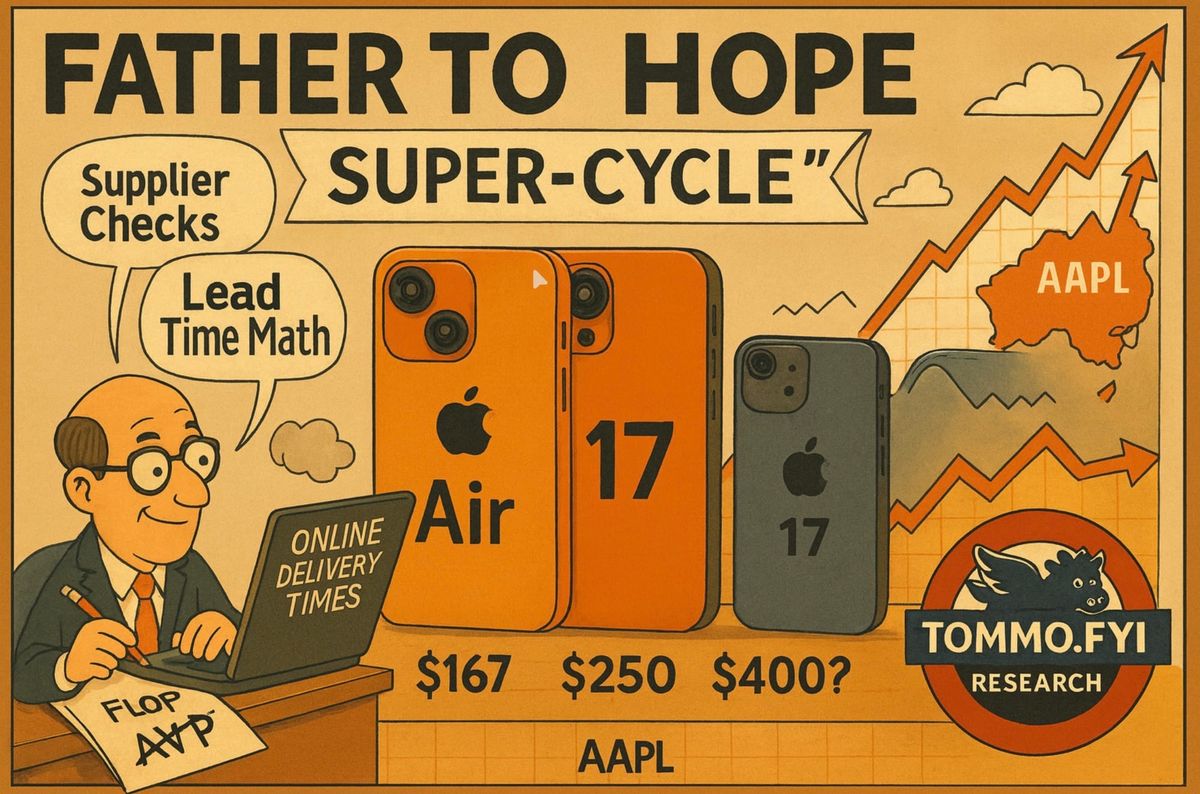
iPhone 17 hysteria is here - but are lead time charts and orange phones really enough to push AAPL over $260? With AVP seemingly shelved and AI stalled in 2024, Apple’s silence is golden… for analysts. But beneath the rally lies a void of vision. What if this is success by absence, not by design?

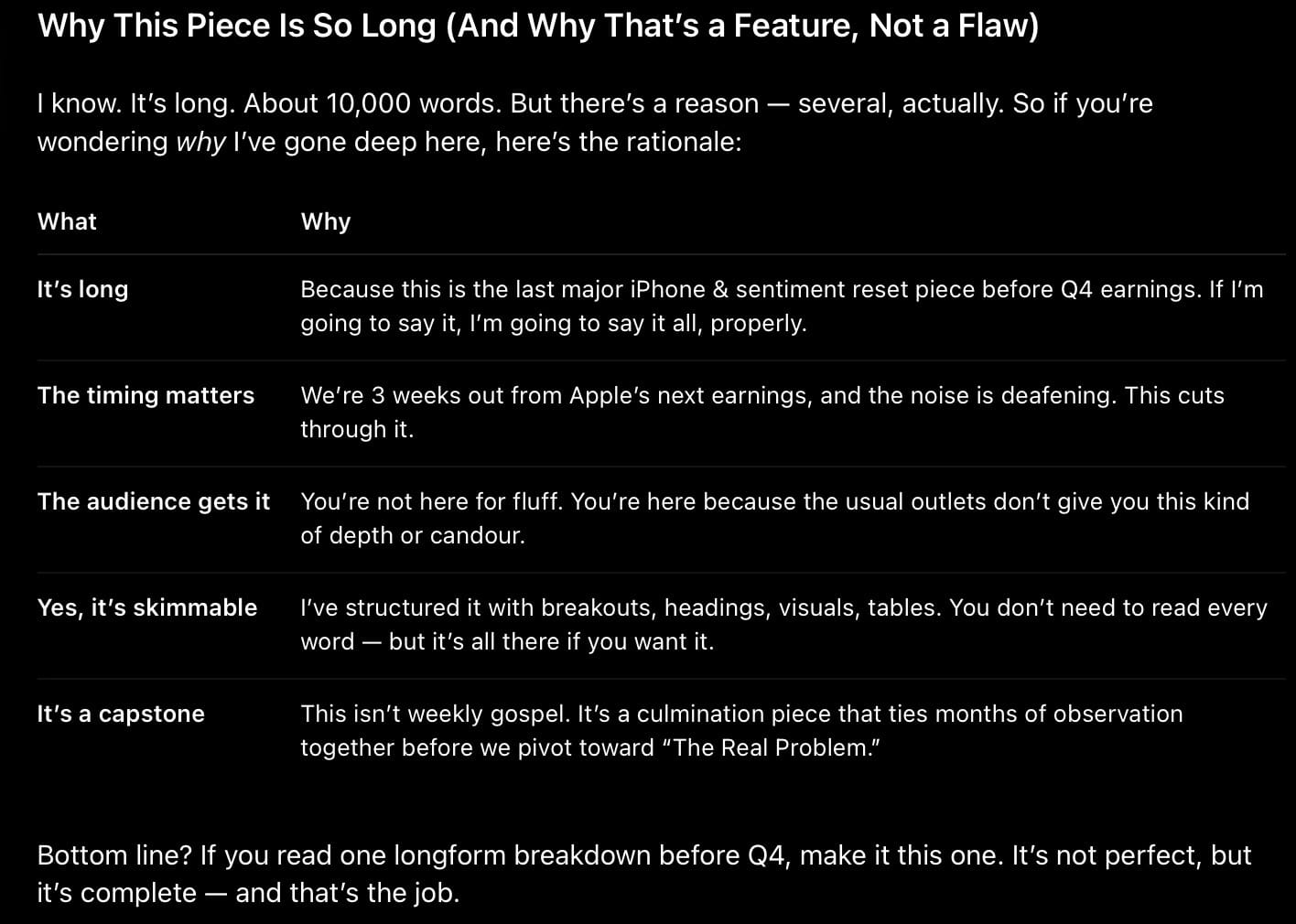
Shout out - this is a long piece.
I’d originally meant to write at about half the length, on launch-day, but as events unfolded, I decided to hold back and more and more material accumulated which was just too germane to this subject to exclude especially this close to Q4 earnings. So I’m offering the analysis, the brain dump, and all the signalling I can pick up on, to muse over, in one go, with this little table as a justification:
“If the Vision Pro was Apple’s most expensive dead-end, the iPhone 17 is its most exaggerated ‘fresh start.’ Both are different faces of the same problem: hype as strategy.”
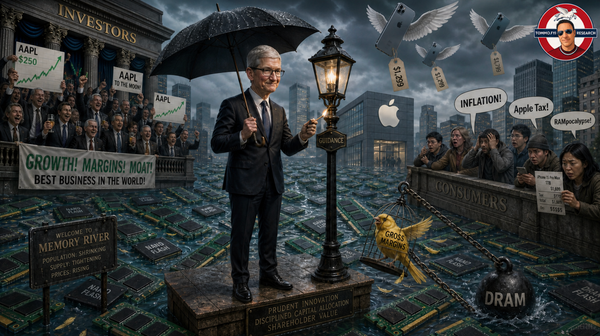
The AVP may be dead (we don’t know, and rumour mongerers Gurman and Cybart are dissing one another over who is gaslighting who), and the iPhone 16 mercifully relegated to yesterday, but what’s really happening with the 17, whose hype has driven AAPL up by about $50 on what seems like analyst hot air and euphoria alone, because there certainly aren’t any sales figures to hang this off yet. It maybe it’s the people of a rumoured foldable (courtesy again of Mark Gurman) for October 2026, which is driving the price up? Because it certainly isn’t AI, or innovation, those two pillars supposedly key to Apple’s growth, which are anywhere but on display.
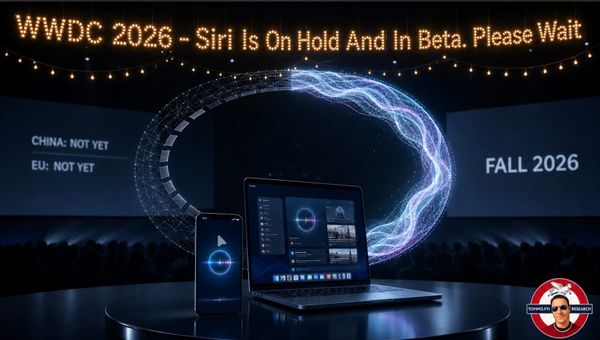
Siri Remains Boxed.
 Tommo_UK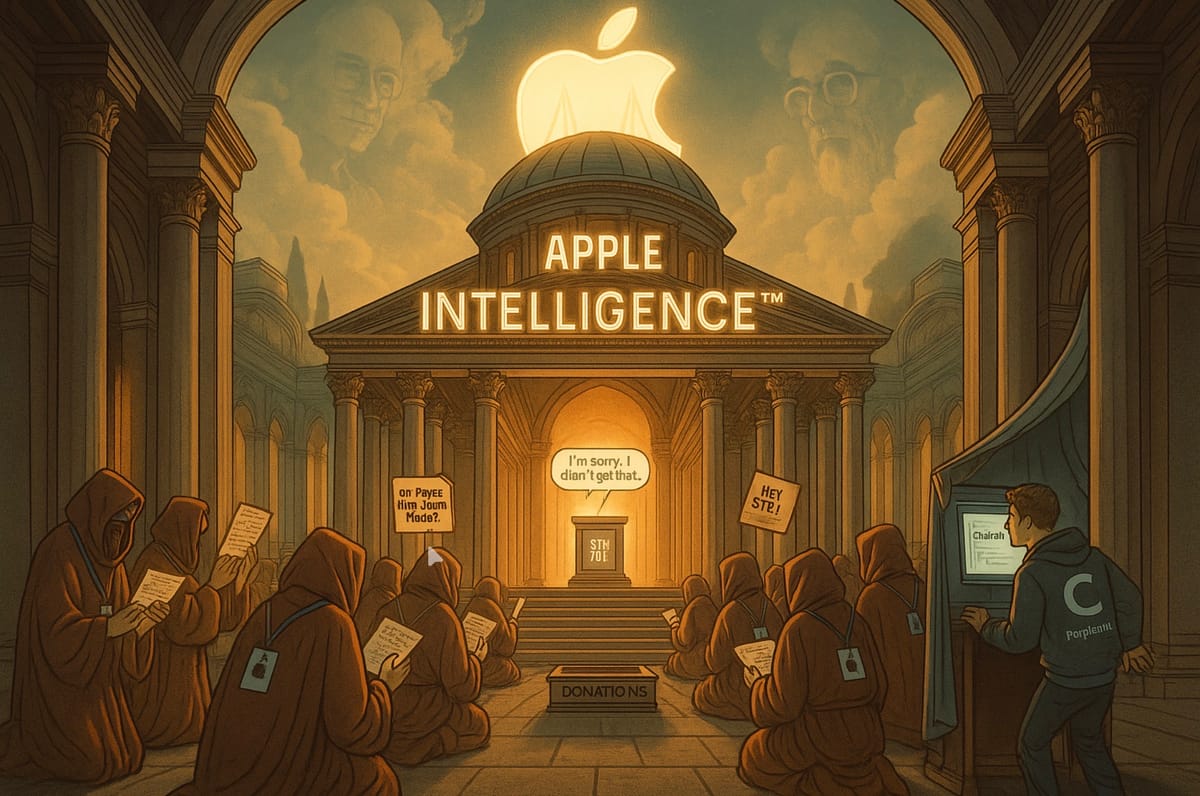
The AVP seems to have been axed for now.
 Tommo_UK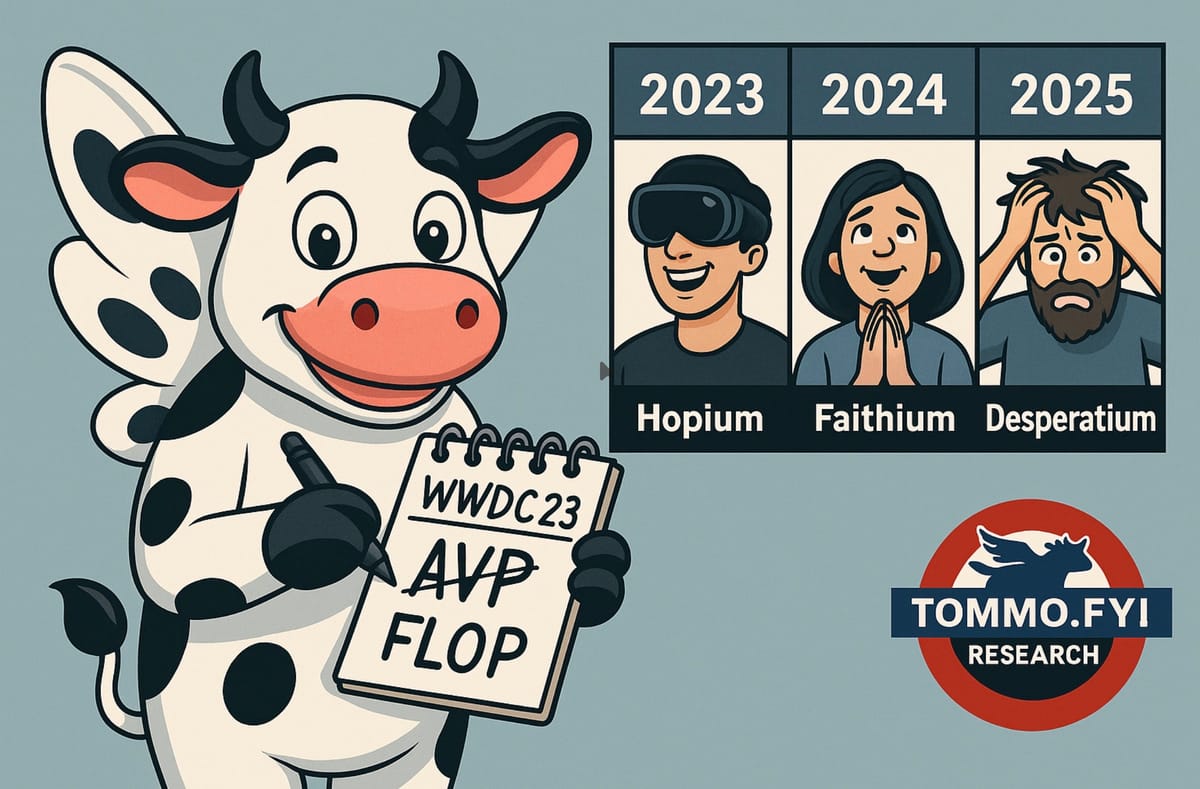
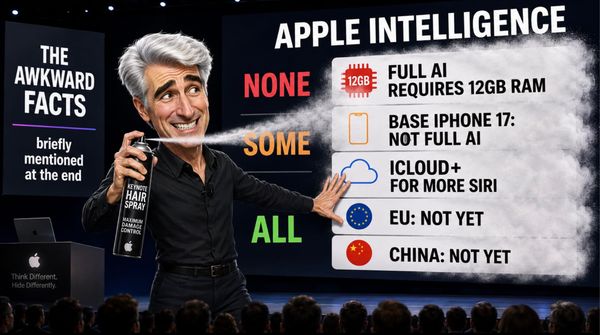
AI is now dismissed by the same analysts who called it an essential to the iPhone story, as “unimportant to iPhone buyers purchasing.” Well, that’s a given isn’t it, because if it was the most important feature they wouldn’t be a buyer participating in the survey would they? Perhaps the question which should be asked is, if AI and true integrated intelligence were present in a new iPhone (in the way Gemini works automatically in the background on Samsung phones and Google), would it make you more like to buy an iPhone? But that wouldn’t fit the narrative.
Apple’s iPhone 17 launch may look like a super-cycle, but six years of iPhones (discussed in Part 1) tell a different story: subsidies, tariffs, plateaus, and theatre. From 5G highs to tariff panics, TOMMO.FYI cuts through the hype to show where Cupertino’s magic really lies — and where it doesn’t. Two weeks ago we looked at the launches of the iPhone 12 to 16 and how relatively speaking they performed, where there was friction, and where there was success, and why. Last week I took a break to look at the flop of the AVP and what it does, and doesn’t say about Cupertino.
 Tommo_UK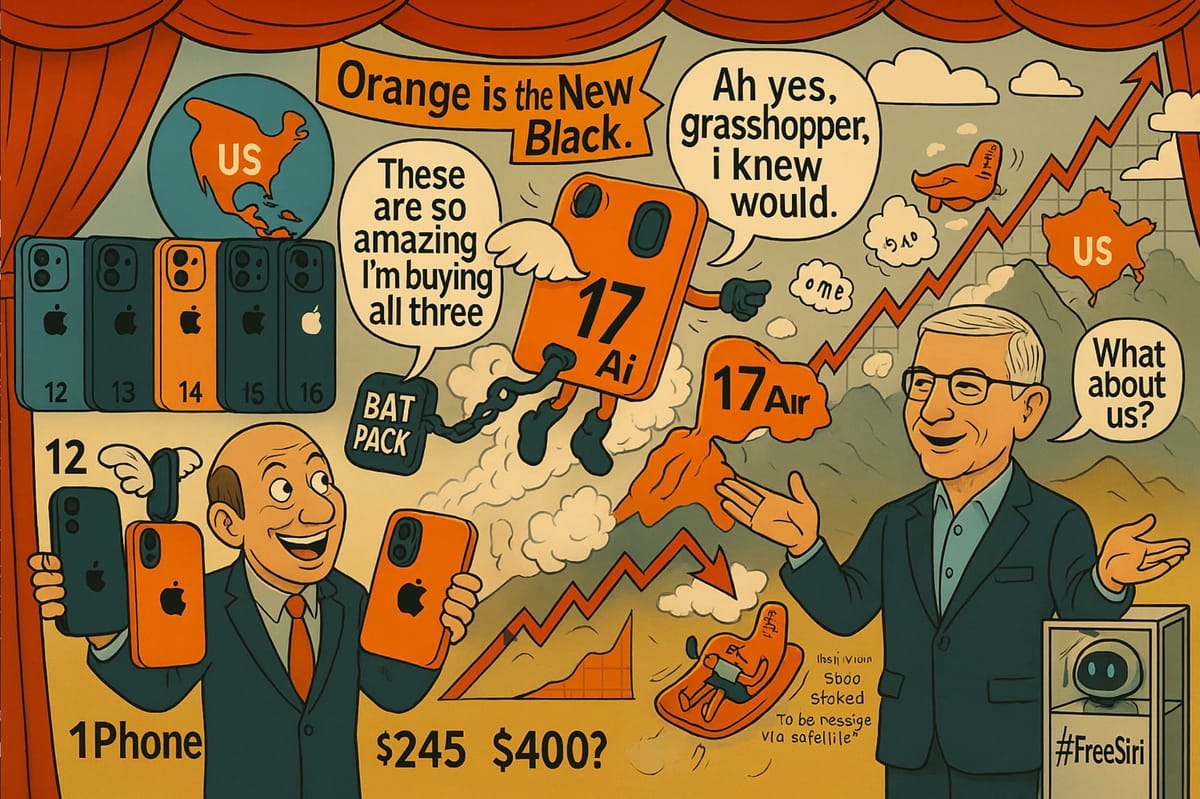
In this Part 2 we’ll look at why the 17 may be much ado about nothing, and certainly is not the panacea it is being made out to be.